
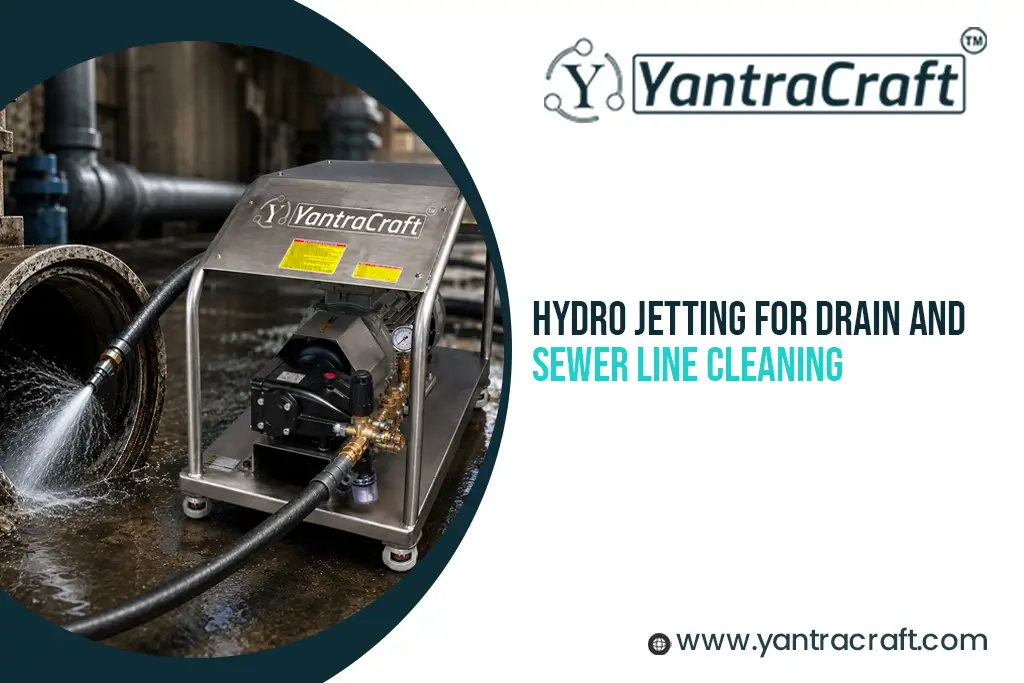
Quick Summary: Blocked drains and choked sewer lines are a common headache in Indian homes, housing societies and factories, especially during the monsoon. Here is a simple look at how high-pressure water jetting clears them for good.
Almost every building in India faces a blocked drain sooner or later. Kitchen waste and oil, hair and soap in bathrooms, silt and mud during the monsoon, and hard-water scale slowly build up inside pipes until the water stops flowing. The usual response is to push a rod through the line or pour acid down the drain. Both give relief for a few days, and then the problem comes back.
Hydro jetting is a better and cleaner way to solve this. It uses only high-pressure water to wash a drain or sewer line clean from the inside. No acid, no digging, and no guesswork. This guide explains what it is, how it works, and how to pick the right machine for the job.
What is Hydro Jetting?
Hydro jetting (also called high-pressure water jetting) is a method of cleaning pipes by shooting water at a high pressure through a special nozzle. A strong hose is pushed into the drain or sewer line, and the nozzle sprays water in different directions. The pressure in the hydrojet cleaning machine is measured in Bar and the amount of water is measured in LPM. At the right pressure, the water cuts through the blockage and scrubs off the dirt from the pipe walls.
How Does Hydro Jetting Work in Drain & Sewer Line Cleaning?
The high pressure water jet machine works through a simple process, usually through the following steps:
Checking the Sewer Line
A camera or a quick inspection is used to find where the blockage is and ensure the pipe is strong enough for jetting.
Insert Jetting Hose
The hydrojet cleaning machine hose is fitted with the right nozzle and is fed into the drain or sewer line.
Blasting of Blockage
The machine sends water through the nozzle at high-pressure. The forward jet breaks the clogging, while the backwards-facing jets scrub the pipe walls and pull the hose deeper into the line.
Flushes Everything Out
A powerful 500 bar hydro blasting machine removes the loosened dirt, grease, sludge and debris, leaving the pipe clean and free-flowing.
What Can Hydro Jetting Remove?
Grease & Cooking Oil
The biggest challenge in kitchen and hotel drain blockages.
Food Waste, Hair & Soap
Common in homes, hostels and housing societies.
Slit, Mud & Sand
Washed into drains during heavy monsoon rains.
Hard-water Scale
The hard, chalky layer that builds up inside pipes in many parts of India.
Sludge in Sewer Lines
The thick mud that slows municipal and industrial sewers.
Why Hydro Jetting is Better Than Traditional Drain Cleaning Methods
| Method | How It Works | The Problem |
|---|---|---|
| Manual Rodding | A rod or a snake is pushed to poke through a clog | Only makes a hole, dirt stays on the wall, so the blockage returns quickly. |
| Acid/chemicals | Strong chemicals are poured to eat away the clog. | Can damage pipes over time, is unsafe to handle & harms drains & the environment |
| Hydro Jetting | High-pressure water scrubs the full inside of the pipe | Cleans wall to wall with just water for longer-lasting results |
Applications of Hydro Jetting
Hydro jetting is widely used for:
- Residential drain cleaning
- Apartment and housing society sewer maintenance
- Hotels and commercial kitchens
- Restaurants and food processing plants
- Municipal sewer networks
- Hospitals and healthcare facilities
- Chemical and pharmaceutical industries
- Manufacturing plants
- Industrial wastewater pipelines
- Stormwater and drainage systems
Choosing the Right Hydro Jetting Machine
Not every blockage needs the same power. Two things that decide which machine is right for you are pressure (Bar) and water flow (LPM):
Small Drains (home, kitchen, bathroom)
A lower-pressure machine is usually enough to clear grease and soft blockages.
Large Sewer Lines and Industry
Higher pressure and more water flow are needed to move heavy sludge, scale and long blockages.
Nozzle Choice Matters
A rotating or multi-hole nozzle cleans a wider area, while a focused nozzle cuts through tough, hardened dirt.
Motor or engine
Electric-motor machines suit indoor use; diesel or petrol engine machines suit outdoor and remote sites without power.
YantraCraft builds hydro jetting systems from 150 to 500 Bar with water flow up to 30 LPM, powered by a strong triplex plunger pump. The range covers everything from society drains to heavy municipal and industrial sewer jetting, so the machine can be matched exactly to the job. Looking for a reliable high pressure washer manufacturer in India to clean the toughest drains and sewer lines, choose YantraCraft. Call us to choose the right equipment for your needs.
Frequently Asked Questions
Is hydro jetting safe for pipes?
Yes, when it is done by a trained operator using the right pressure for the pipe. Healthy metal, RCC and good-quality PVC pipes handle it easily. Very old or already cracked pipes should be checked first, as they may need repair instead of cleaning.
How is hydro jetting different from manual rodding?
Manual rodding or a drain snake mostly pokes a hole through the blockage, so water flows again, but the dirt stuck on the pipe walls stays. Hydro jetting uses high-pressure water to scrub the full inside of the pipe, so the line is cleaned wall to wall and stays clear for much longer.
Does hydro jetting use chemicals?
No. It cleans using only high-pressure water, no acid or harsh chemicals. That makes it safer for your pipes, for the people doing the work, and for the environment.
What pressure do I need for drains versus sewer lines?
Smaller household and kitchen drains are handled well at lower pressure, while larger sewer lines and heavy industrial blockages need higher pressure and more water flow. YantraCraft builds hydro jetting systems from 150 up to 500 Bar with flow up to 30 LPM, so the machine can be matched to the job.