
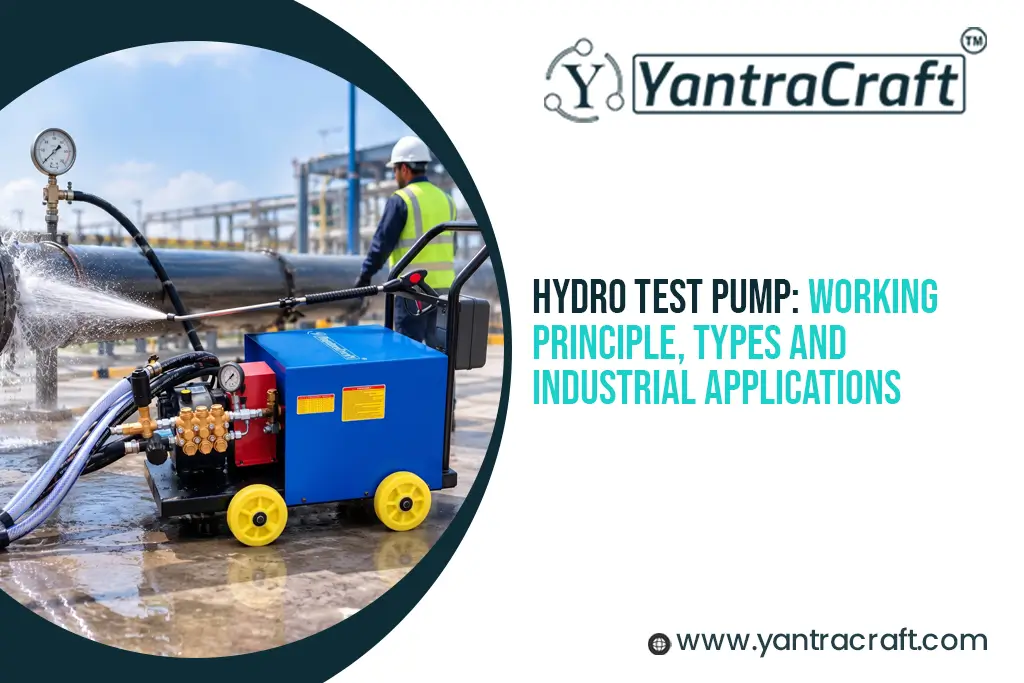
A pipeline can pass every visual inspection and still fail on its first day in service. A pinhole in a weld, a porous casting or a flange gasket seated slightly off won't show up until real pressure arrives.
That's why hydrostatic testing exists, and the hydro test pump is the machine that makes it possible. This guide explains how the pump works, why it uses water, where it's used and what to check before you buy one.
What Is a Hydro Test Pump?
A hydro test pump is a high-pressure pump that fills a sealed component with water and raises its internal pressure to a specified test value. Engineers then hold that pressure and watch for leaks, pressure drops or deformation before the equipment goes into service.
It's used on pipes, valves, pressure vessels, boilers, heat exchangers, hoses and fire-fighting systems. In short, it's used on anything that must safely contain pressure.
Why Water Is Used Instead of Air
This is the question new engineers ask most often, and the answer is about safety.
Water is almost incompressible. When a water-filled pipe fails during a test, the pressure drops almost instantly and the water simply leaks or sprays out. Compressed air behaves very differently. It stores a large amount of energy, and if a component ruptures, that energy is released violently, sometimes throwing metal fragments.
That's why most codes prefer hydrostatic testing, and why pneumatic testing is used only when water truly can't be introduced into the system. Water also makes leaks easy to find. A wet spot, a drip or a falling gauge needle tells the inspector exactly where to look.
How a Hydrostatic Pressure Testing Pump Works
#1 The Pumping Action
Most hydro test pumps are positive displacement pumps, usually plunger or piston type. On the suction stroke, the plunger draws water into the cylinder. On the delivery stroke, it pushes that water into the test piece.
Because water barely compresses, each stroke adds a small, steady rise in pressure inside the closed system. Many industrial units use a triplex plunger design, with three plungers working in sequence, to give smoother flow and a more stable pressure build-up.
#2 Check Valves Keep the Pressure In
Non-return valves on the suction and delivery sides stop water from flowing back between strokes. Without them, pressure would drain away after every cycle and never build up.
#3 Controlling and Holding Pressure
Once the target pressure is reached, the operator isolates the test piece and watches the pressure gauge through the hold period. A stable reading means the component is sound. A falling reading means there's a leak somewhere, either in the component or in the test connections.
#4 Built-In Safety
A pressure relief valve, set slightly above the test pressure, opens automatically if pressure overshoots. After the test, a bleed valve releases pressure slowly before anyone disconnects a hose.
Types of Hydro Test Pumps
#1 Manual Hand-Operated Pumps
These lever-operated pumps need no power supply. They suit small valves, short pipe spools and occasional field checks. They're slow on larger volumes, and operators tire quickly.
#2 Electric Motor-Driven Pumps
This is the workshop standard. A motor drives the plunger continuously, giving fast filling, consistent pressure build-up and repeatable results across many tests a day. A hydraulic water pressure testing machine for production lines is usually electric.
#3 Engine-Driven Pumps
On pipeline projects, construction sites and remote plants, reliable power isn't guaranteed. Diesel or petrol engine-driven units give site crews full testing capability anywhere.
#4 Air-Driven Pumps
Air-driven pumps are used in refineries and gas plants where electric motors near flammable vapour are a risk.
Where Hydro Test Pumps Are Used
➤ Oil, gas and petrochemical: pipelines, spools, valves and wellhead equipment before commissioning.
➤ Power plants: boiler tubes, headers and heat exchangers after fabrication or repair.
➤ Water supply and municipal projects: distribution mains, joints and hydrant lines.
➤ Fire safety systems: sprinkler networks and hydrant lines in buildings and factories.
➤ Fabrication and engineering: pressure vessels, tanks, hydraulic cylinders and castings.
➤ Valve and fittings manufacturing: seat and body tests before dispatch.
Common Mistakes During Hydrostatic Testing
In practice, most failed tests aren't component failures. They're setup mistakes. Watch for these:
➤ Trapped air: Air pockets compress and give false, drifting readings. Vent the highest points until only water flows out.
➤ Temperature change: Water warming or cooling in the sun can move the gauge reading. Allow the system to stabilise before the hold period starts.
➤ Leaking test connections: Check hoses, adapters and blind flanges before blaming the component.
➤ Uncalibrated gauges: An inaccurate gauge makes the whole test meaningless. Keep calibration certificates current.
➤ Standing in the line of fire: Keep people clear of end caps and flanges while under pressure.
How to Choose the Right Hydro Test Pump
1. Maximum Test Pressure
Test pressure is usually set by the applicable code, often above the design pressure. Choose a pump with comfortable headroom rather than one that works at its limit every day.
2. Flow Rate and Test Volume
Large pipelines and vessels take a long time to fill with a low-flow pump. Match the flow to your typical test volume.
3. Drive Type
Choose electric for workshops, engine-driven for field sites, and air-driven for hazardous areas.
4. Service and Spares
Plunger seals and valve seats wear with use. Buy from hydro test pump manufacturers who keep seal kits and spares ready, because a pump waiting for a ₹500 part can hold up an entire project.
Yantracraft Hydro Test Pumps
Yantracraft is among the Indian hydraulic pressure test pump manufacturers building equipment for real working conditions. That means daily shop-floor use, dusty construction sites and long testing shifts. The same high-pressure plunger pump expertise behind Yantracraft's hydro blasting machines goes into its test pump range.
What buyers get:
➤ Pumps matched to your test pressure, volume and site conditions
➤ Electric and engine-driven options for workshop and field use
➤ Robust plunger and valve design for repeated test cycles
➤ Local support for seals, gauges and spares
Explore the Yantracraft hydro test pump range, or share your test requirements through yantracraft.com for a recommendation.
Conclusion
A hydro test pump is a simple machine with a serious job: proving that pipes, valves and vessels can hold pressure before anyone relies on them. Understanding how it works, and avoiding the common setup mistakes, makes testing faster, safer and more trustworthy.
If you need a reliable pump for workshop or site testing, Yantracraft can help you choose the right configuration.
Frequently Asked Questions
What is the difference between hydrostatic and pneumatic testing?
Hydrostatic testing uses water, while pneumatic testing uses air or gas. Hydrostatic testing is safer because water stores very little energy under pressure, so a failure releases pressure without a violent burst.
How much pressure is used in a hydro test?
It depends on the design code and equipment type. Test pressure is usually set above the normal operating or design pressure. Always follow the applicable standard or client specification.
Why does pressure drop during a hydro test?
The common causes are trapped air, temperature change, leaking hoses or fittings, worn pump seals, or a genuine leak in the component under test.
Can a hydro test pump be used on site?
Yes. Manual and engine-driven hydrostatic pressure testing pumps are regularly used for field testing of pipelines, fire lines and repaired equipment.