
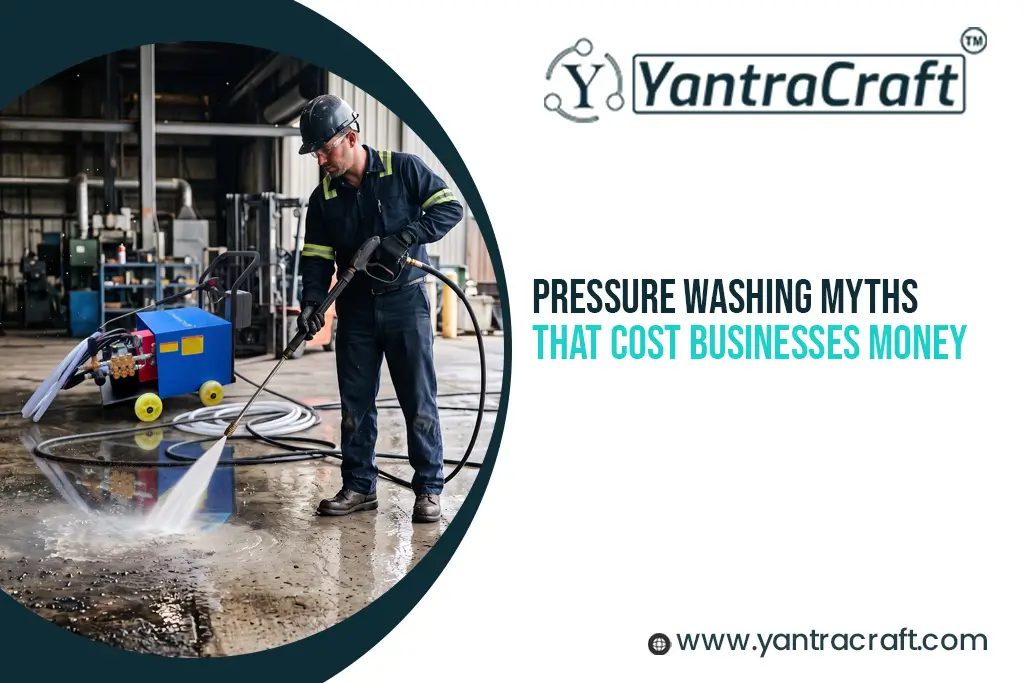
Most factories don’t lose money on cleaning because the dirt is stubborn. They lose it because somebody bought the wrong machine, or because “everyone knows” a few things about pressure washers that aren’t quite true. Water gets wasted, surfaces get damaged, repair bills pile up and cleaning crews stand around waiting.
Cleaning well takes more than raw pressure. The machine, the nozzle, the flow rate and the way it’s used all play a part. At Yantracraft, we supply industrial cleaning equipment and high-pressure water systems for different cleaning jobs across industries, and the same handful of myths keep coming up in our conversations. Here are the ones that cost the most.
What Pressure Washing Myths Should Businesses Know?
Myth 1: More Pressure Always Cleans Better
Ask around a plant and someone will tell you the machine with the biggest pressure number gives the best clean. It usually doesn’t. Push too hard and you can strip paint, wreck seals and coatings, harm delicate parts or mark a floor that was perfectly fine before you started.
What decides the result is a mix of things: the dirt itself, what it’s stuck to, how much water is coming through, the spray angle and how close you’re standing. Grease generally needs a cleaning agent as well, and hardened industrial deposits sometimes call for specialised equipment altogether.
Then there’s the nozzle, which gets less thought than it should. A narrow one concentrates the force on a small spot and a wide one spreads it out over more surface. Pick the wrong one and dirt stays behind, or the surface takes a beating, and operators tend to react by stepping closer or pushing the pressure up, which makes it worse. It’s worth following what the manufacturer recommends and trying the setup on a small hidden patch first, keeping a safe distance while you do.
So before you buy an industrial pressure washer, sit down and work out what you’re cleaning and what it’s made of. Get pressure and flow right for that and you’ll get a better result without a repair bill.
Myth 2: Pressure Washing Wastes Water
A lot of businesses stay away from pressure washing because they assume it drinks more water than a hose and a brush. That depends. How much water you actually use comes down to the machine’s flow rate, how long it runs and how you go about the job.
A machine that’s well matched to the work often gets through the dirt quicker than someone scrubbing by hand, so the water is on for less time overall. The thing to avoid is buying purely for the biggest water output. Balance pressure and flow instead. Operators also need to switch the machine off when nobody’s using it, and use the right nozzle for the task. Do all that, then keep an eye on cleaning time and water use for a few weeks, and it becomes obvious where the waste is hiding.
Myth 3: One Machine Does Everything
A washer that works well on cars or a small workshop floor may be useless against heavy scales on industrial equipment. Different jobs need different pressure ranges, flow rates, accessories and duty capacity.
Take a pressure washer 180 bar. It suits some demanding jobs, but nobody should assume it’s right for every factory, vehicle or water-jetting task. If the machine is too small, cleaning drags on and the operator gets worn out. Go too big and you pay more to buy it and more to run it. The sensible way is to look at your real workload, how often you clean and what surfaces you deal with, and pick from there.
Portable units get written off as light-duty, which isn’t fair. The best portable power washer for your business is the one that gives you the performance you need and is still easy enough to move around. That helps in workshops, maintenance departments, vehicle service bays and big sites where cleaning points are spread out. Don’t trade away pressure, flow or duty capacity just to make it lighter, though. Before choosing one, think about how far you’ll carry it, how long the hose has to be, where the power and water come from, and how often it’ll change location.
Myth 4: The Cheapest Machine Saves the Most Money
What you pay at the counter is only a slice of what a machine costs. A cheap unit that wasn’t built for heavy daily use tends to cost you in longer cleaning times, downtime and frequent repairs.
Before you buy, ask about the pump and the duty rating, then the pressure and flow it actually delivers. Spare parts, maintenance and technical support are worth checking as well. A machine that fits your workload can work out as better value even at a higher price, and it often finishes routine jobs faster. Less downtime and steady performance make a real dent in running costs.
Myth 5: Maintenance Can Wait Until Something Breaks
It really can’t. Small problems get expensive when nobody looks at them. Worn seals, clogged filters, damaged hoses and a poor water supply all hurt cleaning performance and put strain on the machine.
You don’t need an elaborate routine. Look over the hoses and connections, then check and clean the inlet filters and have a glance at the nozzles. Follow the manufacturer’s pump and service instructions too. If an operator spots a leak, hears something odd or sees the pressure change suddenly, the machine should stop until someone has a look. Catching things early is fwhat keeps equipment dependable day to day.
How Yantracraft Can Help
Pressure washing pays off when the equipment fits the cleaning challenge, and not when it’s chosen by assumptions about maximum pressure or lowest price.
Yantracraft supplies industrial pressure washers, portable pressure washers, hydro-jetting systems and hydro-blasting equipment for a range of cleaning and maintenance work. We start with the application, the pressure and flow you need and your operating conditions, and go from there.
Final Thoughts
These myths cost money in plain ways: extra water, damaged surfaces, slow cleaning cycles and repairs that never needed to happen. More pressure isn’t always better, the cheapest machine often isn’t the cheapest in the end, and maintenance should never be left for later.
The smarter way is to understand the cleaning task, pick the right machine and nozzle, train your operators and keep up a regular maintenance routine.
Want to cut cleaning time and avoid equipment costs you don’t need? Contact Yantracraft, tell us what you clean and how often, and we’ll help you choose a pressure washer or high-pressure water system that fits your application.
Industrial cleaning costs
Industrial pressure washer
Pressure washer 180 bar
Pressure washing mistakes
Pressure washing myths
Frequently Asked Questions
Does higher pressure always give better results?
No. Pressure, flow, nozzle choice, surface type and the kind of dirt all play a part, and too much pressure can damage some materials.
Can a pressure washer lower cleaning costs?
Yes, when it’s chosen and used well. It can shorten cleaning time and cut manual effort. What you actually save depends on water use, running costs, maintenance and how you clean.
How often should an industrial pressure washer be serviced?
Follow the manufacturer’s schedule and inspect it regularly. Check the hoses, connections, filters, nozzles and pump parts according to how hard the machine works.
How do I choose the right pressure washer for my business?
Think about the application and surface first, then the pressure and flow you need and how often you’ll use it. After that, look at the power source, mobility, maintenance needs and after-sales support.
Can portable pressure washers be used in industry?
Some can. Certain portable models are built for industrial or commercial work, so check pressure, flow, duty capacity and operating requirements before using one for regular industrial jobs.