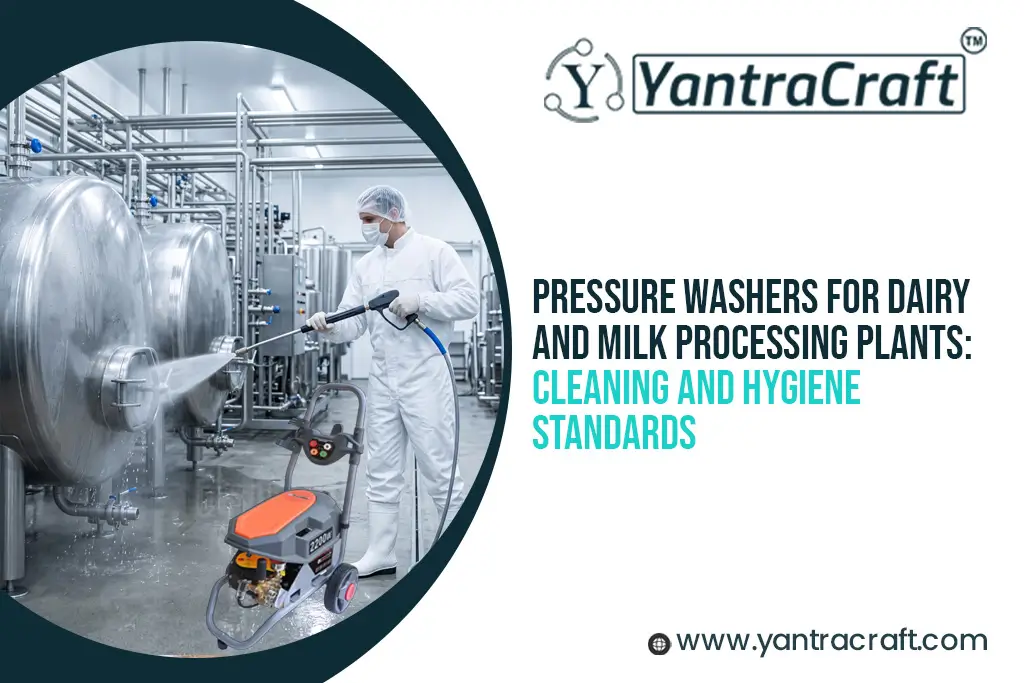
Walk into a dairy after a shift and you’ll see what milk leaves behind. Cream and fat on the floor, protein film on the tanks, and once it dries it sticks hard. Leave it half-cleaned and the next sanitation round gets harder, and it becomes a hygiene problem too.
That’s where a good industrial pressure washer earns its keep. Rather than scrubbing every surface by hand, a plant can lift the stubborn stuff off with controlled high-pressure water, and get the same result on every shift.
Yantracraft makes industrial cleaning equipment for tough jobs, including food and dairy plants, with a range of pressure washers and high-pressure water systems.
Why Hygiene Matters So Much Here
Dairy is easy ground for microbes. When cleaning is sloppy, bacteria find somewhere to grow, and milk fat and protein that dries on equipment is a pain to remove later.
That’s why we’d say cleaning needs a routine. Floors, tanks and drains each need different handling, and it makes no difference whether they touch food or only sit close to it.
A pressure washer helps because you control the pressure and the flow. It won’t make a surface hygienic by itself, though. You’d still need to get the temperature right where it applies, use the right chemicals and follow a proper sanitation procedure, all matched to the surface and what’s on it.
Where It Gets Used in a Dairy
The biggest savings in time and labour come from the large, dirty areas. Processing floors and walls are the obvious ones, then milk handling areas, storage tanks and the outside of processing equipment. Smaller jobs add up too: pipes and fittings, loading bays, trolleys and racks, containers, drains, and the packaging and utility areas.
High-pressure water takes loose dirt, dried product and grease off suitable surfaces. Be careful on sensitive equipment and food-contact surfaces, though. Follow the manufacturer’s cleaning instructions there, and keep the pressure down so seals, fittings and other parts aren’t damaged.
Pressure and Flow Are Different Things
People often mix these two up. Pressure is the force that loosens the dirt, and flow is what carries it away.
Very high pressure isn’t automatically right for every dairy job. A
pressure washer 180 bar, for example, can handle demanding general cleaning, as long as its pressure and flow suit the surface and the residue.
What you need comes down to how dirty the area is and how far you stand from it, plus the nozzle, the surface and how often the machine runs. Also ask yourself whether it’ll work all day or only in short bursts during a production shift.
What You Get From High-Pressure Cleaning
The first thing you notice is time. High-pressure water loosens stubborn deposits faster than scrubbing alone, so the gap between production runs gets shorter. The
right nozzles also get into corners, joints and equipment frames that are awkward to reach by hand.
It’s more repeatable too. Once pressure, flow, nozzle distance and procedure are fixed, one operator’s work looks much like another’s, from shift to shift. And people do less repetitive scrubbing, which matters in a big plant.
One benefit gets overlooked: water use. Getting pressure and flow right cleans well without just pouring on more water. That’s another reason to pick a machine for the job and not for the biggest number on the spec sheet.
Portable Machines for Maintenance
Not every cleaning job is next to a fixed wash station. A dairy often has to move equipment between processing rooms, utility areas, storage zones and outdoor spaces.
A portable high pressure washer solves that. A trolley-mounted unit goes where the work is, so you don’t need a separate machine in every corner of the plant.
Before buying one, check hose length, weight, power source, water supply, pressure, flow and how often it’ll be moved. A trained operator should be able to handle it safely without a struggle.
Standards and Safe Practice
Pressure washing is one piece of the plant’s wider sanitation programme. Spraying equipment with water doesn’t replace a validated cleaning and sanitizing procedure.
In practice, a plant starts by rinsing off loose milk residue. Then it cleans using the right method and an approved detergent where needed, rinses off whatever was loosened, and inspects the surface for anything left behind. Sanitizing follows, using the approved process, and a final check confirms the area is ready for production.
Operators should also keep dirty water and clean runoff off surfaces that are already clean. Otherwise you’ve just moved the mess.
Choosing the Right Equipment
Don’t just go for the highest pressure available. Choose for what your plant actually does. Start with the pressure and flow you need, plus the type of residue, then look at the surface material, how often you clean and what power or fuel you have. Mobility, hose and nozzle options, ease of maintenance, operator safety and fit with your sanitation procedure all count too.
Take a close look at the pump, since it decides how water is pressurized and delivered. If you’re comparing
high pressure water jet pump manufacturers in India, look at pump construction, pressure range, flow capacity, what the pump is suited for, service support and how easy spare parts are to get.
Why Choose Yantracraft For Dairy Cleaning
Dairy cleaning is heavy work that repeats every day. You want equipment that can take that punishment, and you want your operators to be able to match the machine to the job in front of them.
Yantracraft supplies
industrial pressure washer and specialised high-pressure water systems for
food and beverage plants. They’re used on processing areas, machinery, tanks, pipelines and other industrial surfaces. There are different pressure categories to pick from, plus hydro-jetting and hydro-blasting systems for the harder jobs. So you choose by what needs cleaning, and you don’t end up making one machine do everything.
Final Thoughts
A clean dairy is better for the product, better for the people working in it and easier to run day to day. The right pressure washer speeds up routine cleaning and makes it more even, and you’ll notice it most where milk residue, grease and dried-on deposits are the problem.
One piece of advice, though: don’t chase the highest pressure. Pressure, flow, nozzles and how delicate the surface is all matter. So do the cleaning chemicals, operator safety and your sanitation procedures, and they have to work together.
Got a dairy or milk processing plant that’s hard to keep clean? Talk to
Yantracraft. Tell us what you’re cleaning, how often and what’s been giving you trouble, and we’ll help you find a pressure washer or high-pressure water system that fits.